What do we know about this year’s new reporters?
There’s a common adage that you can’t manage what you can’t measure, and when it comes to improving energy efficiency, nothing is more critical than benchmarking.
Energy benchmarking is the process by which building operators track their buildings’ energy and water usage over time. By understanding their buildings’ energy consumption, operators can use standardized metrics to compare their buildings’ performance against past performance and to peers nationwide. Benchmarking has been shown to drive energy efficiency upgrades and increase occupancy rates and property values.
DC has the oldest benchmarking requirements in the US. Originally signed into law through the Clean and Affordable Energy Act of 2008 (CAEA), benchmarking only applied to private buildings larger than 50,000 square feet (ft2) and public buildings larger than 10,000 ft2^. After four waves of data collection, the District expanded the law through the Clean Energy DC Omnibus Act of 2018 to cover smaller building sizes and require data verification by third parties for quality assurance.
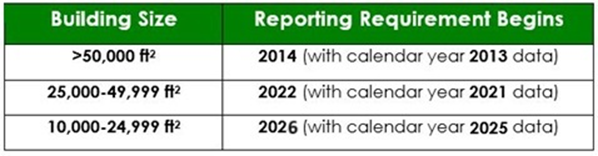
For the first time this year, private buildings between 10,000 ft2 and 24,999 ft2 (which are classified as small buildings) are required to submit full-building energy and water data to DOEE. This cohort of buildings doubles the number of buildings required to benchmark, making it critical to understanding the energy and water demands of DC’s buildings and their impact on progress toward the DC’s ambitious climate goals.
To better understand the locations and functions of these small buildings, DOEE staff took a closer look at available building details for these new reporters. Our analysis is based on records from the Office of Tax and Revenue retrieved on January 1, 2026. The data were cleaned to remove all foreign or federal ownership, public buildings, buildings outside of the 10,000 ft2 -24,999 ft2 range, and new builds from 2025-2026. This preliminary review found that most new reporters are residential multifamily buildings, many are buildings built between 1940-1969, and there is a high concentration of new reporters in Ward 2.
The Three R’s: residential, religious, and retail
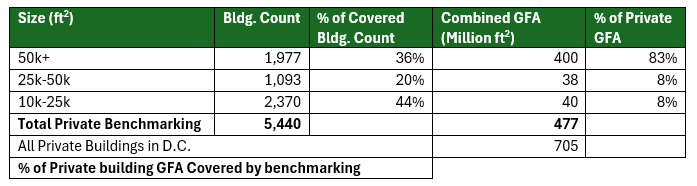
Table 2 has a breakdown of the percentage and the gross floor of private buildings by size classification. Small buildings make up 44% of the private building count but only account for 8% of the total covered gross floor area (GFA). As the benchmarking size threshold has decreased over time, benchmarking now covers 68% of all private buildings in DC.
Outside of Ward 2, these small buildings are generally evenly distributed between wards with the least new reporters coming from Ward 4. However, Ward 2 stands out with over double the number of small buildings compared to any other ward. This mirrors the broader distribution of buildings, with the highest concentration of all buildings required to report in Ward 2. There is a high percentage of buildings in Ward 8 as well, reflecting an increase in development. In contrast, Wards 3 and 4 have the lowest overall distribution of buildings required to report. Table 3 shows how each size classification is distributed within the DC’s wards.
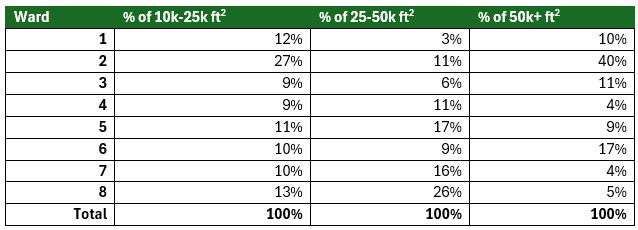
Figure 1 shows the distribution of new reporters across DC’s wards. The highest concentrations of these small buildings stretch in a large cluster from West End to Dupont Circle towards Logan Circle and another smaller cluster in Georgetown. Other hot spots can be found around Adam’s Morgan in Ward 1 and on either side of Fort Stanton Park in Ward 8.
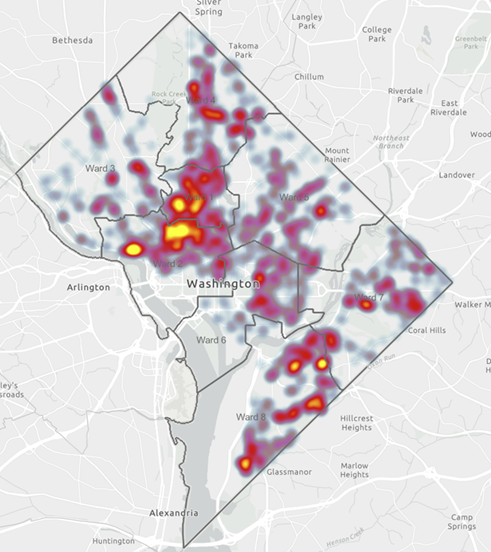
Figure 2 highlights the building use types associated with these small buildings, representing over 45 different building use types. A total of 82% of all new reporters this year were residential, retail, or religious building use types. Residential buildings compose 66% of all new reporters.
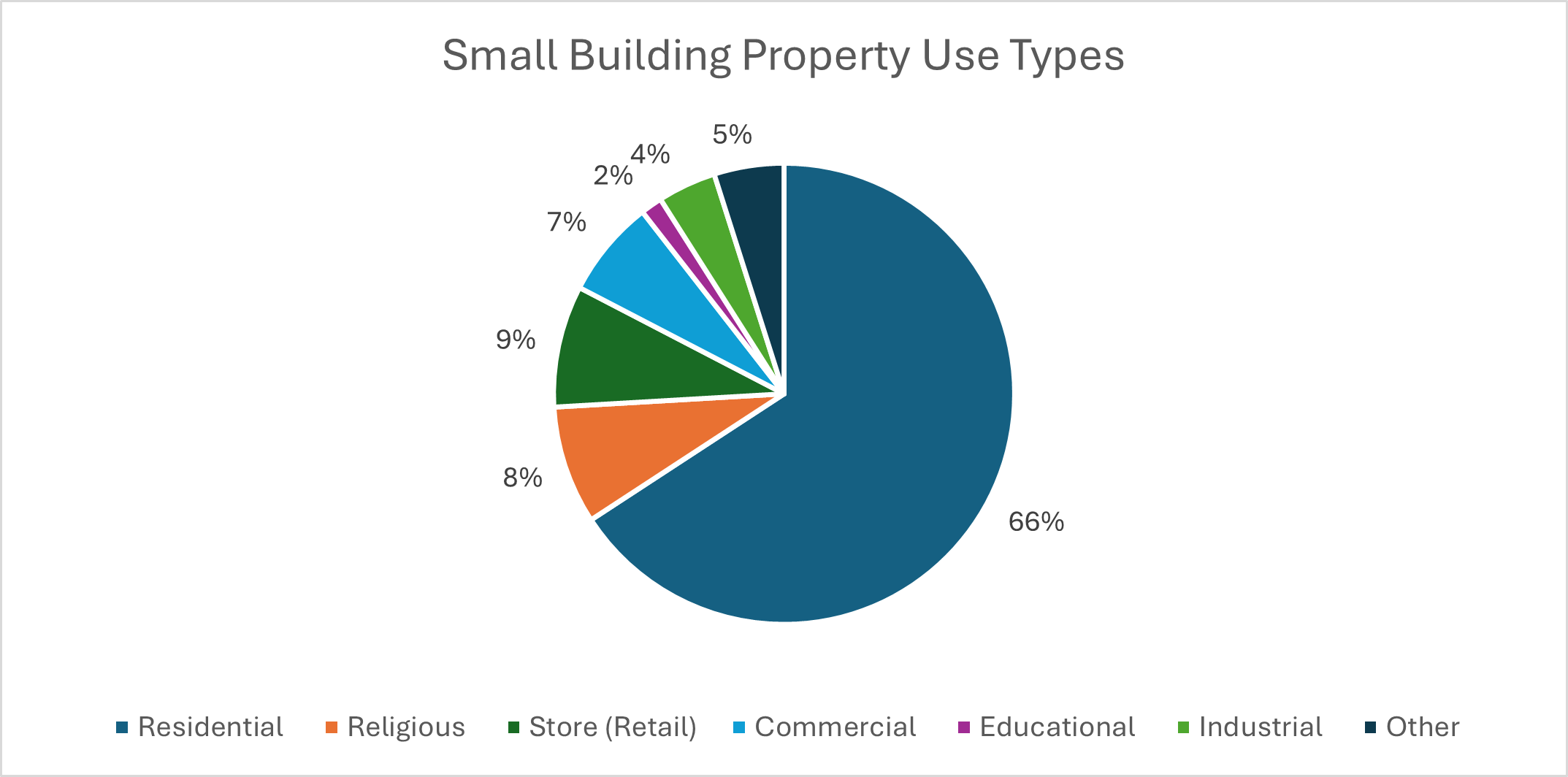
Compared to larger buildings in Figure 3, this new group of small buildings represents a slight increase in new residential buildings and large dip in new commercial space. Rather than being classified as commercial space (23% of buildings over 25,000 ft2 compared to 7% of small buildings), a greater percentage of small buildings are represented as “Store” (retail). Hotels make up a notable percentage of buildings over 25,000 ft2 but are barely represented in the small building group. Industrial use is represented consistently among building sizes.
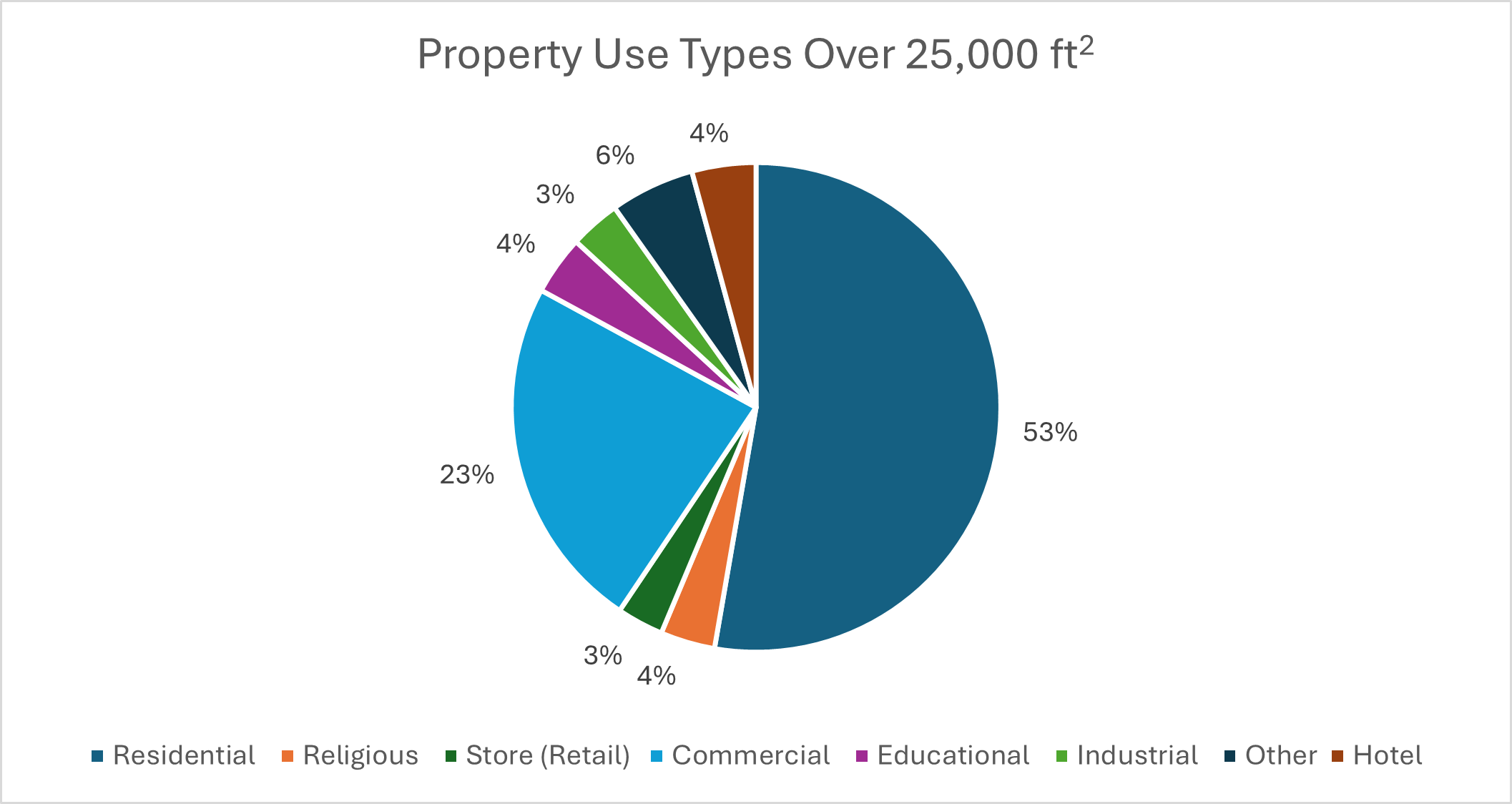
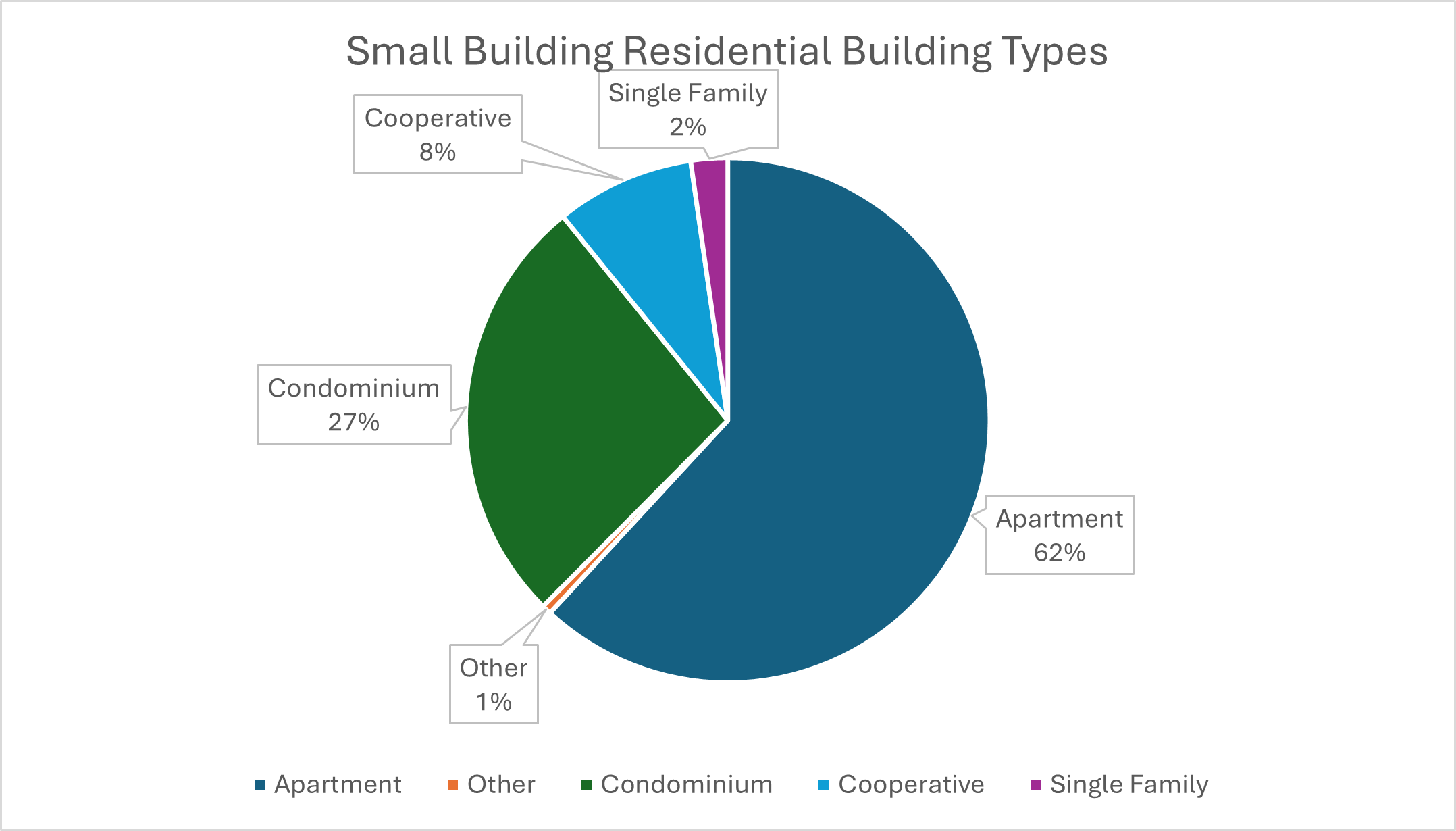
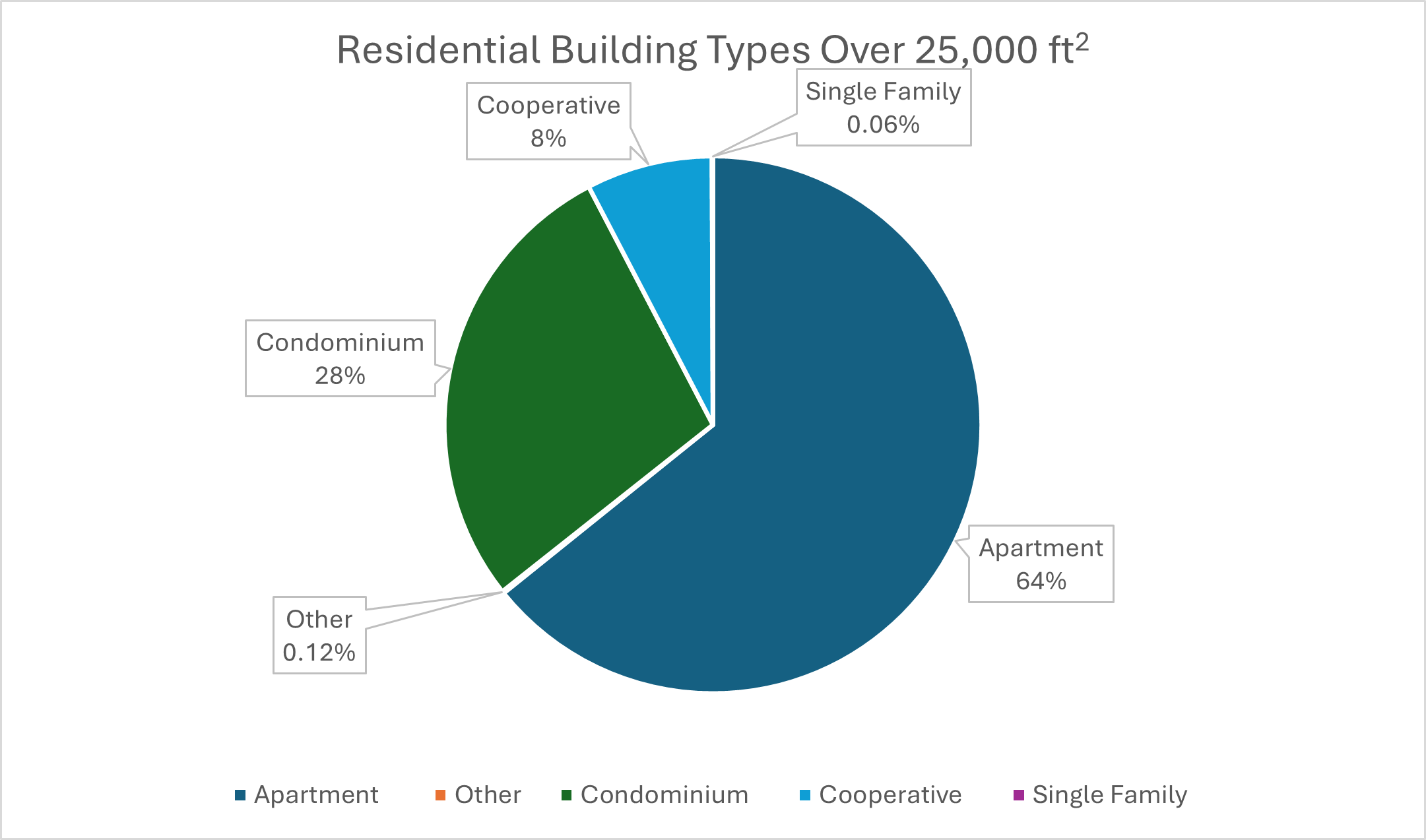
Figure 4 shows a more detailed breakdown of types of residential buildings. The majority are multifamily apartment buildings, followed by condominiums. Building conversions and transient housing make up the small percentage of “Other” residential use. An increased number of single-family homes now meet the size threshold to report their annual data to DOEE. Looking at the buildings over 25,000 ft2 shown in Figure 5, only one single-family home was identified, compared to 35 single-family homes in the small buildings range. Representation between apartments, cooperatives, and condominiums remain consistent across size thresholds.
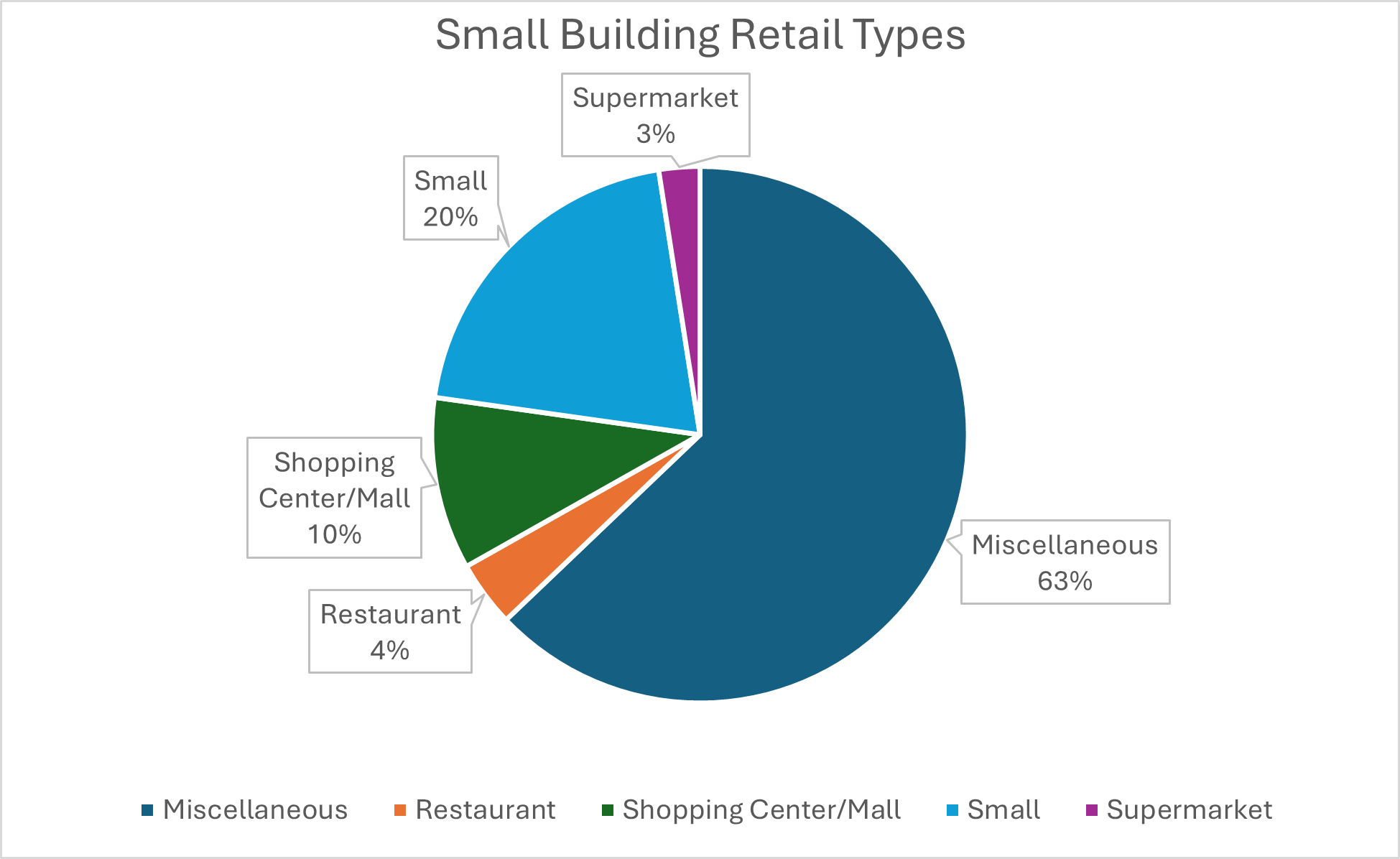
Unfortunately, there is insufficient data available for retail spaces to further analyze what types of stores are now reporting. Based on the tax data, summarized in Figure 6, the largest subset of retail is categorized as “Miscellaneous”, followed by “Small.” The third largest subset of retail spaces is “Shopping Centers/Malls.”
The tax data used to determine new reporters does not include more detailed classifications for religious building types. However, by cross-referencing tax data against data for places of worship, over 60% of the small religious buildings identify as Christian churches.
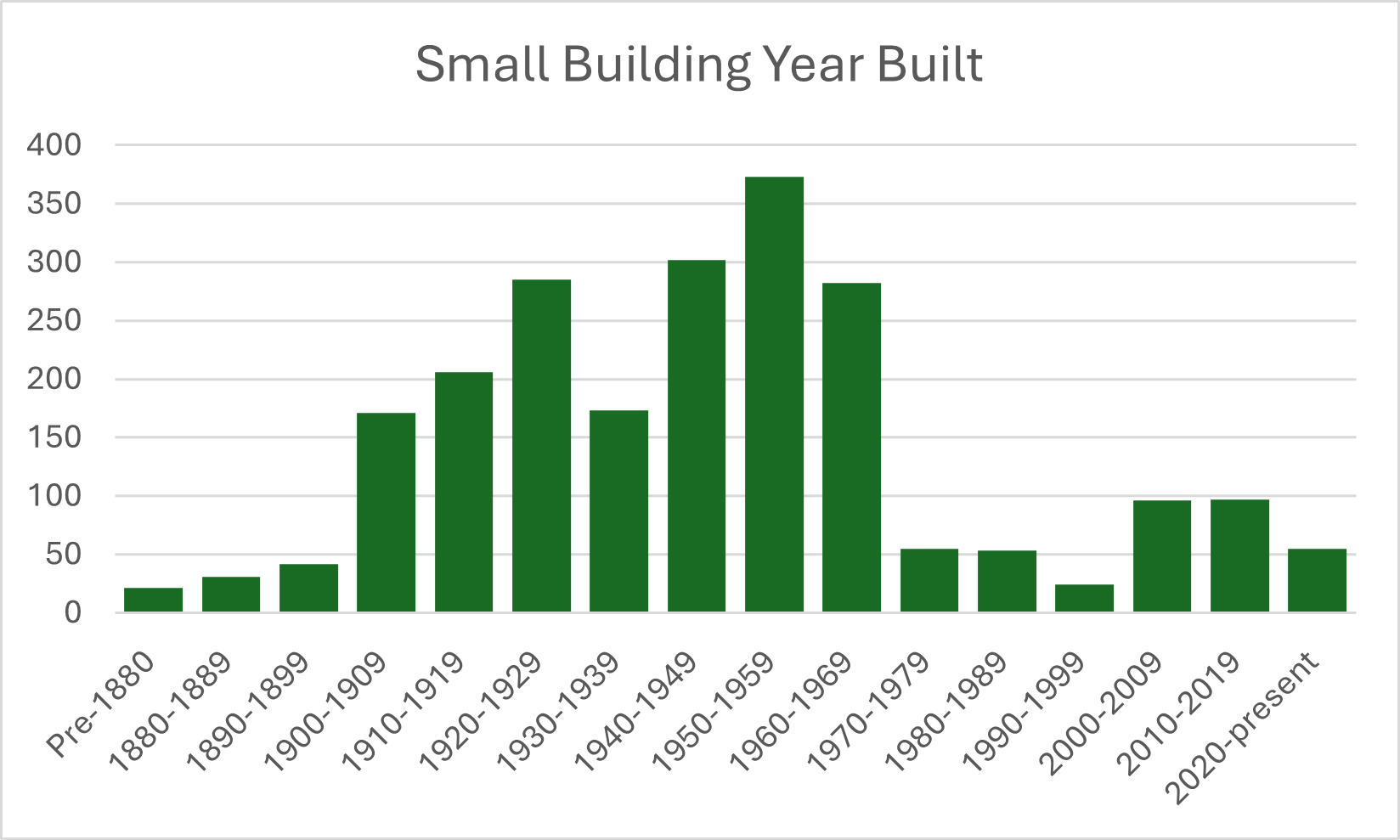
While building age has generally not been found to directly correlate with energy performance, it could become a factor, as older buildings may require additional considerations when implementing energy efficiency improvements. Over 40% of small buildings were erected between 1940 – 1969, funded, in part, by New Deal incentives and reflecting post-war changes in DC’s population size and housing needs. This was followed by a period of suburban flight in the 1970s and 1980s, during which construction focused on larger projects, such as Metrorail expansion and downtown office buildings.
What does this mean in terms of building performance?
We won’t know until buildings submit their CY 2025 benchmarking data on May 1st. Per benchmarking law, first-time reporter data will not be disclosed publicly. However, small buildings are generally expected to consume less energy than larger buildings. Since the turn of the century, apartments in small buildings have declined as a share of energy use. At the same time, building developers have increased awareness that small buildings require fewer materials and less energy to function, saving thousands in construction and operation costs.
Despite lower energy use, small buildings represent a major market for energy conservation. According to a study by Pacific Northwest National Laboratory (PNNL), small, fast-food restaurants could potentially save 45% of their energy use, resulting in a 28-66% rate of return. A 10% reduction in energy costs for grocery stores is calculated to increase profit by 16%. These analyses show significant opportunities for small buildings to improve both energy and financial performance. Buildings do not need to consume a lot of energy to maximize the benefits of energy efficiency measures. What’s next for these buildings?
DOEE has released updated guidance to help new reporters with the benchmarking process, with a focus on the main three property use types and additional details focused on residential, religious, and retail buildings. These property use types make up most of the new reporters. Additional outreach and guidance have been provided to DC Main Streets, Business Improvement Districts, and all-encompassing faith-based organizations. By providing additional attention where there are the highest concentrations of buildings and most prominent types of buildings, DOEE strives to make the benchmarking process more accessible to new small building reporters.
Data from these buildings will eventually be incorporated into future cycles of the DC’s Building Energy Performance Standards (BEPS) and may provide critical information on how to reduce energy consumption and bills for occupants of smaller buildings. As energy costs continue to rise, nearly doubling in the last five years, any reduction in use can result in significant savings. Every building, no matter how big or small, can do its part to make DC the healthiest, greenest, and most livable city in the country.